Rats under decking: signs, control and prevention
Updated 23 October 2026 · By the MintGuard team
Quick answer
For suspected rats under decking, check for repeated activity, droppings and burrows without reaching underneath. Remove accessible food and ask a pest controller to assess an active nest or route towards the house. Do not immediately seal every edge: control and exclusion need planning so animals are not trapped beneath the deck.
Decking can provide a sheltered space close to bins, bird feeders and the back door. That does not mean every noise beneath it is a rat. A careful inspection helps distinguish a passing visitor from an established problem and protects other wildlife. Here is how to reduce the attraction, organise appropriate help and plan repairs that remain useful after the current activity stops.
| Finding | Immediate action | Longer-term step |
|---|---|---|
| Repeated entry below boards | Keep clear; record evidence | Professional assessment |
| Spilled feed nearby | Remove and store securely | Review feeding routine |
| Open deck perimeter | Do not seal active routes yet | Plan suitable exclusion |
| Signs beside house wall | Check accessible indoor areas | Coordinated building inspection |
Signs that rats may be using the space
Look for droppings on nearby sheltered edges, worn routes, gnawed material and burrow entrances beside the deck. Repeated footage of rats entering the same gap is stronger evidence than one unexplained rustle. A smell alone is not enough to identify the animal or locate a nest.
Photograph from above or outside the structure without pushing a camera, hand or tool into an unknown space. Keep children and pets away from entrances. Note whether activity leads towards bins, a shed or the house. If you cannot see below the boards safely, that is a reason to arrange an inspection, not to crawl underneath or start dismantling a deck without checking its condition.
Why decking can attract rats
The covered void offers shelter from disturbance, especially when the edges are partly enclosed and the space is difficult to inspect. Nearby food can make that shelter more useful. Spilled seed, pet food, poorly closed bins and edible waste in a compost area all deserve attention.
Decking itself is not necessarily the original cause. Rodents may be travelling from an adjacent garden, a shared waste area or a defect elsewhere on the property. Treat the deck as one part of the site. Clearing your own food sources and sharing factual observations with neighbours can be more effective than repeatedly disturbing the same entrance while leaving the reason for the visits unchanged.
Best for this problem
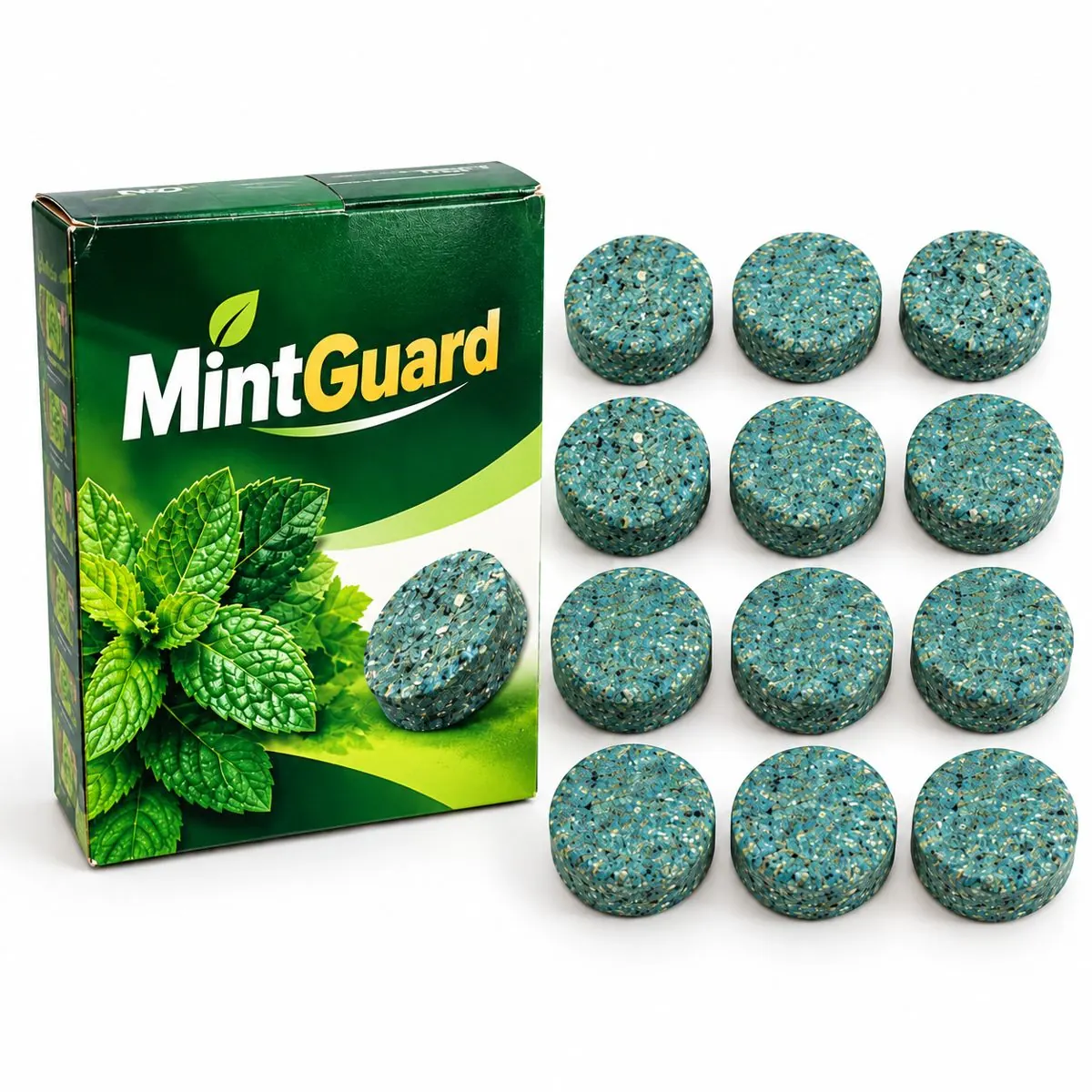
For prevention after cleaning and proofing, start with one MintGuard pack of 12 balls for £39. Choose only enough for dry, inaccessible placement points; it will not clear an established infestation.
Remove food without creating another feeding point
Start with the area around the deck and work outwards. Clear food after outdoor meals, clean greasy barbecue residue when safe and collect fallen fruit where practical. Check that bin lids close properly and that waste is not sitting in split bags beside them.
- Store bird seed and pet food in robust, tightly closed containers.
- Clear spilled seed below feeders and review feeding if rats keep returning.
- Bring pet bowls in after meals.
- Avoid leaving edible scraps in open compost.
- Report overflowing communal bins to the responsible organisation.
Do not move a feeding station just a short distance away and assume the problem is solved. If rats have a reliable food supply elsewhere, coordinate changes with the people responsible for that area.
Inspect the deck without disturbing wildlife
Other animals may shelter under a deck. Do not assume an entrance belongs to rats, and do not block it simply because you dislike having wildlife close to the house. A competent inspection should consider the likely species, signs of nesting and the safest way to proceed.
Avoid smoke, flooding, fuel, strong chemicals or attempts to flush animals out with a hose. These methods can cause harm and damage without resolving access. Keep dogs from digging at the edges. If boards need lifting, use someone who can assess the structure and access safely. Tell the controller about pets, ponds, visiting wildlife and any earlier treatment so the plan accounts for the whole garden.
Why sealing the edges comes later
Mesh and edging can help exclude rodents when properly specified and fitted, but closing an occupied void can leave animals trapped. An incomplete barrier may simply divert them to another opening or towards the house. Agree the sequence of control, checking and final exclusion before ordering repairs.
The right detail depends on the deck, ground levels and nearby structures. A contractor should consider gnaw-resistant materials, secure fixings and vulnerable junctions rather than attaching flimsy mesh to one visible side. Ventilation, drainage and future inspection access still matter. Ask how the work will cope with movement, soil settlement and maintenance; a hidden gap behind a step can undermine otherwise careful edging.
Check whether activity extends towards the house
Inspect accessible air-brick surrounds, door thresholds and pipe entries near the deck without covering essential openings. Look indoors for fresh droppings or damage near the corresponding wall. If activity is suspected inside, tell the pest controller immediately so the garden and building can be assessed together.
Do not cover air bricks with solid panels or fill every cavity with foam. Ventilation protects the building, and inappropriate repairs can cause separate problems. Ask for purpose-designed, properly fitted protection where suitable. A suspected drainage defect also needs the right investigation rather than a guessed repair. If you rent or live in a managed development, notify the responsible party and provide photographs before structural work is arranged.
Cleaning around decking and contaminated items
Avoid brushing dry droppings through the gaps or using a pressure washer as your first response to contamination. These actions can spread dirty material and make it harder to control where it goes. Keep the area out of use while you decide what can be cleaned safely.
For a small accessible patch, wear gloves and use a suitable disinfectant according to its instructions before careful removal. Check surface compatibility, particularly on treated wood and near plants, drains or ponds. Extensive contamination beneath boards may need professional cleaning advice. Protect broken skin and wash hands afterwards. If you become unwell after possible contact with rat urine or contaminated water, seek medical advice and explain the exposure; the NHS has guidance on leptospirosis.
Where MintGuard helps, and where it does not
MintGuard is a repellent made from pressed peppermint, clove and castor oil balls. It does not clear an established infestation beneath decking. Open, wet and inaccessible spaces are poor places for loose scent products: you need a suitable dry position where the product can be checked, retrieved and kept away from children and animals.
One pack of 12 balls is £39, with bundles at £69 for two, £89 for three and £109 for four. Each ball lasts 30–60 days. MintGuard is sold only on mintguard.co.uk with a 90-day money-back guarantee. Consider it only as a supporting deterrent in suitable locations after the main problem is addressed. Do not throw balls through decking gaps or treat scent as a substitute for food control and exclusion.
When to call the council or a pest controller
Get professional help for repeated rat activity, a suspected nest, burrows you cannot assess or signs extending indoors. Ask for an inspection-led plan that includes food sources, treatment if needed, follow-up and a clear point when exclusion can be completed. Find out whether decking access or repairs require a separate contractor.
Your council may offer pest services or advice, and GOV.UK directs you to local reporting arrangements. Charges and availability vary. Shared waste or drainage issues may need a different team. Glue traps have been illegal for the public to use on rodents in England since 31 July 2024; restricted professional licences do not authorise household use. For other UK nations, check the applicable rules rather than assuming English licensing applies everywhere.
Common questions
Does decking always cause rats?
No. It can provide shelter, but food availability, surrounding activity and access to buildings also matter. A well-maintained deck with inspectable edges is different from a concealed void beside open food waste. Focus on the whole site rather than blaming the timber alone.
Should I remove the decking to get rid of rats?
Not automatically. An inspection may identify a practical control and exclusion plan without removing the whole structure. Some access may be necessary for assessment or cleaning, but agree the purpose and safe method before lifting boards.
Can I fill the burrows under my deck?
Avoid filling suspected active burrows before identification and a control plan. Other wildlife may be involved, and closing a hole does not remove food or stop alternative routes. Ask a controller when and how any openings should be repaired.
Will my dog scare rats away from decking?
Do not rely on it or encourage chasing and digging. Pets can be injured or exposed to contamination, and disturbance does not resolve the underlying route. Keep animals away from suspect entrances and tell your controller which pets use the garden.
Can rats get from decking into the house?
They may do so if suitable openings exist nearby. Inspect accessible door edges, service entries and ventilation surrounds, and report indoor signs promptly. The deck can conceal access, so investigation should consider the adjoining building rather than the garden alone.
Is peppermint enough for rats under an outdoor deck?
No scent should be relied on to clear an established infestation, especially in an open, damp or windy space. Prioritise food removal, professional assessment where needed and correctly timed exclusion. Use any deterrent only in positions allowed by its instructions.
Sources
Get MintGuard
12 pressed peppermint balls per pack. No poison, no traps. Tracked UK delivery and a 90-day money-back guarantee.
- 2 MintGuard packs
- £69
- UK delivery
- Calculated at checkout
- You save
- £87
- Total
- £69
- Tracked UK delivery
- 90-day money-back
- Secure checkout by Shopify


Pay with Apple Pay or Google Pay in one tap
- What happens next: 1. Pay on our secure checkout · 2. We dispatch your order · 3. You get a tracking email
Written by the MintGuard team
Last checked 23 October 2026. Plain, practical advice for UK homes. For a serious or ongoing infestation, contact your local council pest service or a qualified pest controller. Keep all repellents out of reach of children and pets.